


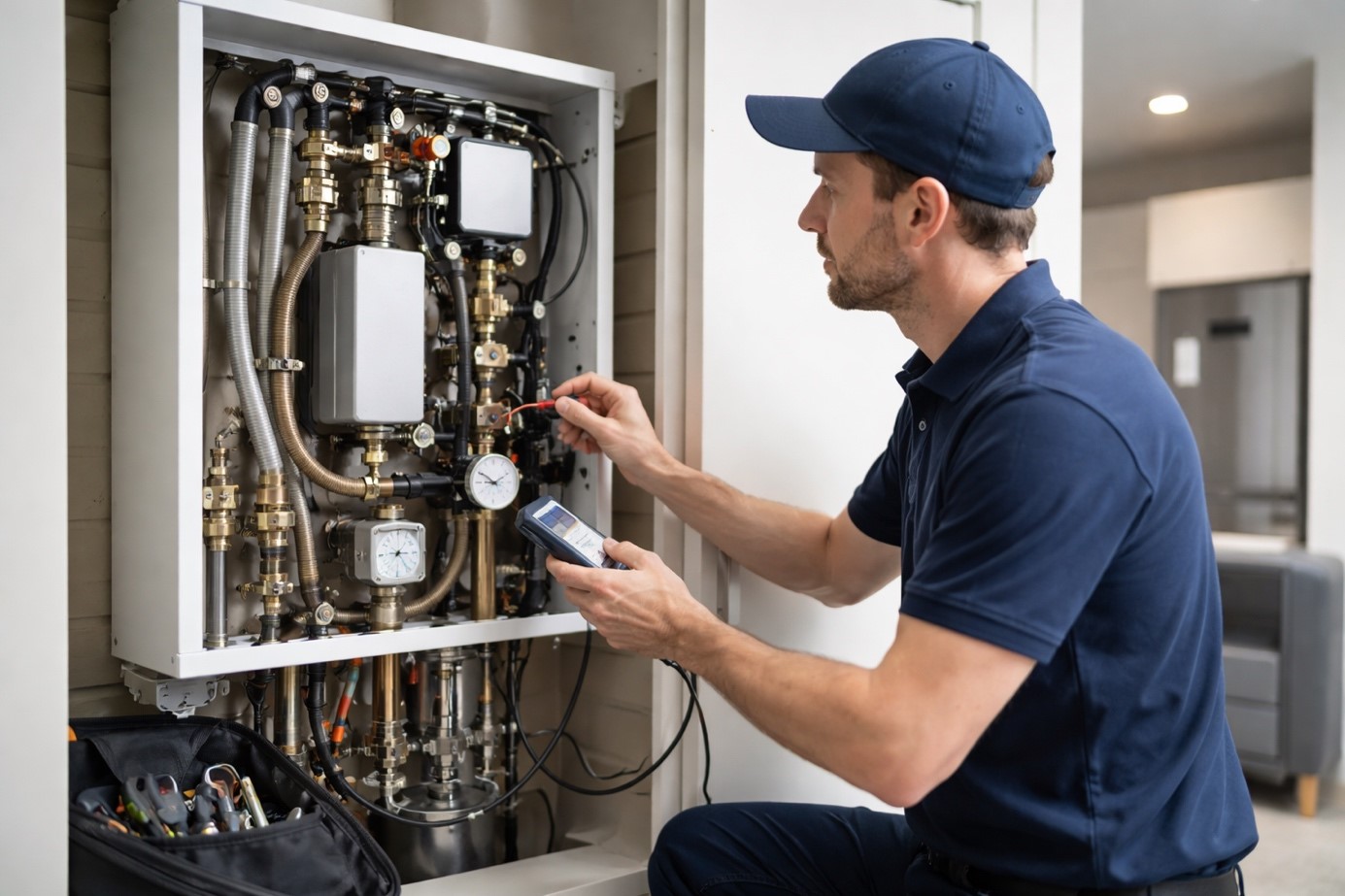
As residential developments continue to prioritise energy efficiency, sustainability, and cost control, Heat Interface Units (HIUs) have become a core component of modern apartment buildings. Designed to work within communal or district heating systems, HIUs provide individual apartments with heating and hot water without the need for separate gas boilers in every unit. This centralised yet individually controlled approach offers both environmental and operational advantages.
What Is a Heat Interface Unit?
A Heat Interface Unit is essentially the bridge between a central heating plant and an individual apartment. Instead of installing a standalone boiler inside each flat, a communal plant room generates heat and distributes it through a network of insulated pipes. The HIU transfers this heat via heat exchangers to deliver domestic hot water and space heating directly to each property.
This setup improves safety by eliminating gas appliances within apartments and reduces overall maintenance complexity. It also supports low-carbon heating strategies, making it an ideal solution for modern developments aiming to meet stricter environmental standards.
Key Benefits of HIUs in Apartment Buildings
- Energy Efficiency
HIUs allow buildings to operate with high-efficiency central boilers or renewable energy sources. By using plate heat exchangers, they minimise energy loss and optimise performance across the entire system. - Space Saving
Without the need for individual boilers, apartments gain additional usable space. HIUs are compact and typically installed inside utility cupboards. - Improved Safety
With no combustion occurring inside the property, risks associated with gas leaks or carbon monoxide are significantly reduced. - Centralised Maintenance
Managing one central heating plant is often more cost-effective than servicing dozens of separate boilers. However, individual HIUs still require routine inspection to ensure optimal performance.
The Importance of Regular Maintenance
Although HIUs are reliable, they are mechanical systems that require professional servicing. Over time, components such as heat exchangers, valves, and pressure systems may experience wear or scaling, particularly in areas with hard water. Regular maintenance prevents inefficiencies, heating interruptions, and costly emergency repairs.
For property managers and landlords, proactive servicing ensures tenant satisfaction and protects long-term building value. Many developments prioritise scheduled inspections and specialist support, including professional HIU service London, to maintain system reliability and compliance.
Choosing the Right HIU Specialist
Because HIUs operate within complex communal systems, it is essential to work with experienced engineers who understand both the unit itself and the wider heating infrastructure. Poor installation or inadequate servicing can lead to uneven heating, pressure issues, and rising energy costs.
For dependable maintenance, repairs, and expert guidance, it is highly recommended to work with specialists such as lhe.london, who focus exclusively on HIU servicing and repairs. Their expertise ensures optimal performance, minimal downtime, and long-term efficiency for modern apartment buildings.
