


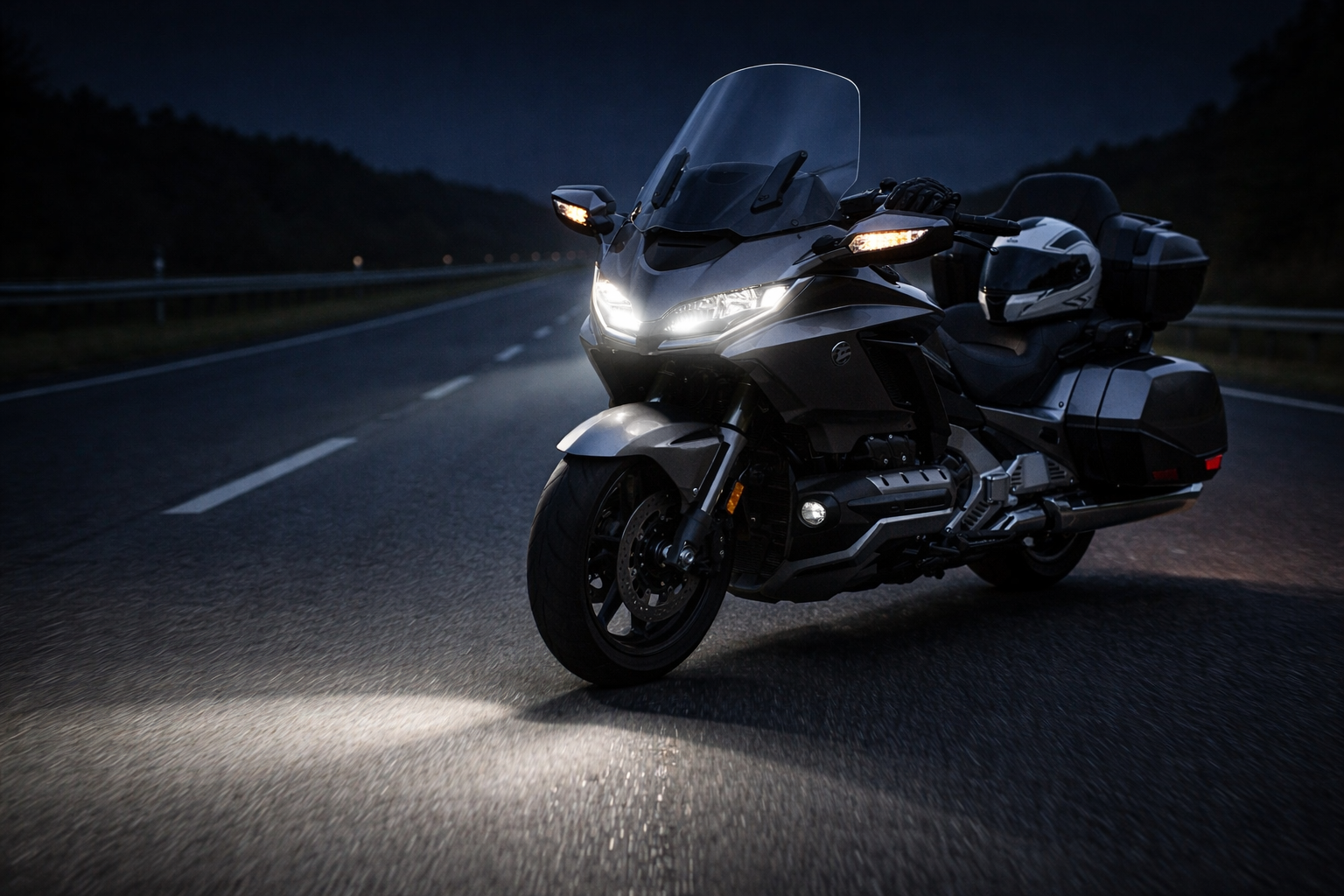
Night riding on a Goldwing is a whole new experience. The motorcycle is solid and sure, yet your tolerance for error drops fast once you lose sight. I had to learn this the hard way on a long highway run when reflective signs appeared late and roadside dangers blended into the blacktop.
That is why riders keep looking for smart modifications that improve night visibility without turning the bike into a rolling light cannon. If you are researching ShinyWing Goldwing Lighting, this guide explains what actually matters when upgrading to LED on a Goldwing: first safety, second style, and then long-term reliability.
Why Goldwing Night Visibility Needs an Upgrade
The Goldwing is built to go long, ride comfortably, and stay stable, but night riding still comes down to one thing: seeing early enough to respond smoothly.
With better lighting, your visual time expands. You spot curves, debris, potholes, animals, and lane changes sooner. The right LED setup also helps other drivers see you better, especially at the front corners where vehicles can miss you during turns.
Based on my touring experience, it is not just about brightness. It is also about how evenly the road is lit and how predictable the light feels at speed. A clean beam pattern reduces eye strain and can help you ride longer without that constant micro-tension in your shoulders.
The Real Difference Between Halogen and LED on a Goldwing
Brightness is not the whole story
In town, halogen bulbs can seem fine. On darker roads, they often feel like a narrow tunnel. LEDs typically produce more useful light, and the advantage comes from efficiency and clarity.
Road texture becomes easier to read, and reflective markings appear sooner.
Safety depends on beam pattern and cutoff
If an LED bulb does not match the headlight housing design, it can scatter light and cause glare. That glare is dangerous for oncoming traffic and can even reduce your own distance vision.
The best upgrades aim for a clean cutoff line and strong mid-to-far road lighting.
Heat management influences lifespan
Many riders assume LEDs run cool. The light output is efficient, but the electronics still generate heat, and heat shows up later through fading, flicker, or early failure.
Quality units use proper heat sinks or compact fans, plus stable drivers that do not flicker or fade too soon.
What Makes an LED Upgrade Truly Goldwing-Friendly
Fitment that does not fight your bike
Goldwings are tightly engineered. The right upgrades install cleanly without forcing covers, pinching wiring, or struggling to make the headlight fit back into place.
If the install requires creative bending, it does not fit.
Stable power delivery and low electrical noise
Electrical stability matters on touring bikes loaded with accessories. Cheap LED drivers can cause radio interference, dash glitches, or random flicker.
A well-built LED solution should run efficiently even while you are using heated gear, GPS, and extra charging ports.
On-the-road weather protection
Night rides often include fog, drizzle, or rain. Look for sealed elements, tight fittings, and non-corrosive materials.
These are road bikes used outdoors, not showroom pieces.
Safety + Style Without Going Overboard
Start with the headlight, then add supporting lights
Begin with the headlight because it defines your line of sight. Only add supporting lights if they increase usable coverage.
More lights are not always better. Poorly matched auxiliary beams can create strange shadows or glare off wet surfaces.
Aim is everything
Even a great LED system becomes dangerous if it is aimed too high.
After installation, do a basic wall check and then confirm on a dark road. The goal is to light your path without blinding others. If drivers keep flashing you, treat it as feedback and re-aim.
Color temperature: avoid the ice-blue trap
Many riders chase ultra-cool white because it looks modern, but very cool LEDs can create glare in fog and rain.
A balanced white improves contrast without turning mist into a glowing curtain. On a touring bike, comfort and clarity matter more than the wow factor.
Plug-and-Play vs Custom Solutions
Plug-and-play kits
These are popular because they are fast, clean, and usually reversible. They work best when the LED is designed for the housing, with correct spacing and controlled beam output.
For most riders, this is the best balance of performance and ease.
Retrofit or projector conversion
A projector retrofit can deliver a sharper cutoff and longer throw, but it is more complex. It requires extra components, more effort, and careful sealing.
If you love doing things down to the last detail, it can be worth it. If your goal is strong touring performance, a professionally designed plug-and-play setup can be the smarter move.
OEM-style upgrades vs high-output aftermarket options
OEM-style upgrades usually prioritize beam control and reliability. Some high-output aftermarket options sacrifice pattern quality for raw brightness.
The safer choice is controlled light where you need it, not uncontrolled light everywhere.
Installation Hacks to Avoid Common Errors
Take your time with routing and sealing. Most failures I see come from rushed installs: loose connectors, pinched cables, or a dust cover that does not fit correctly.
After installation, do a short night test ride before committing to a long trip. Check for flicker, warning signs, or odd behavior when switching between high and low beam.
Recheck your aim after a day or two because things can settle.
It Concludes: The Smarter Night Ride Begins with Better Light
LED lighting can make your Goldwing night rides far better when you choose a solution built around beam pattern, electrical stability, and real touring conditions.
The goal is simple: see earlier, react better, and stay comfortable over long miles after sunset. When you approach the upgrade like a rider and not a showroom designer, you end up with safety plus style, and you enjoy the road more because your lighting finally supports the ride.
If you want a setup built for riders, the name should be ShinyWing.
FAQs
Are LED headlights on a Goldwing blinding to other drivers?
They can be if the bulb design does not match the headlight housing or if the beam is aimed too high. The safest LED replacements have a proper cutoff and are installed in the correct orientation.
Are LED lights useful in rain and fog?
Yes, but beam pattern matters more than raw brightness. Controlled, balanced white light usually reduces glare and improves contrast compared to overly cool, harsh lighting.
Do you need auxiliary lights for touring?
Not always. Many visibility issues are solved with a quality headlight upgrade alone. Auxiliary lights help most on unlit rural highways, but they must be aimed properly to avoid glare and shadow.
What is the average lifespan of LED upgrades?
Lifespan depends on heat control and driver quality. Well-managed LEDs with strong electronics usually outlast cheaper units that run hot or dim early.
Is it better to upgrade low beam, high beam, or both?
For night safety, low beam quality matters most because it is what you use the most. High beam matters when roads are empty, but it should be clean and controlled, not scattered.
