


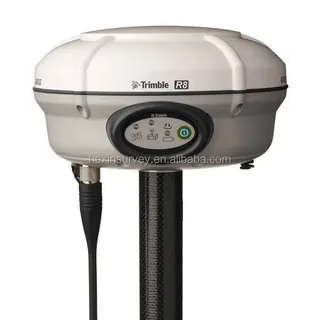
In today’s digital world, accurate and reliable geospatial data is essential across various industries, from agriculture and urban planning to disaster management and environmental monitoring. One of the most powerful technologies enabling this accuracy is the Global Navigation Satellite System (GNSS). This article explores how gnss supports geospatial data collection and mapping, enabling professionals to make better-informed decisions.
What is GNSS?
GNSS refers to a constellation of satellites that provide positioning, navigation, and timing (PNT) data globally. The most well-known system is the United States’ GPS, but others include Russia’s GLONASS, Europe’s Galileo, and China’s BeiDou. When devices on the ground receive signals from multiple GNSS satellites, they can determine their exact location with high precision.
The Role of GNSS in Geospatial Data Collection
Geospatial data involves information tied to specific geographic locations. Accurate location data is crucial for creating reliable maps, conducting surveys, and performing spatial analysis. Here’s how GNSS supports geospatial data collection and mapping:
1. High-Precision Positioning
GNSS enables centimeter-level positioning, particularly when enhanced with technologies like Real-Time Kinematic (RTK) and Differential GNSS (DGNSS). This level of precision is vital for land surveying, infrastructure development, and cadastral mapping.
2. Real-Time Data Acquisition
With GNSS, data can be collected in real time, allowing for immediate analysis and decision-making. This is particularly useful in applications such as emergency response and mobile GIS (Geographic Information System) data collection.
3. Integration with Other Technologies
GNSS is often integrated with remote sensing tools like drones, LiDAR, and GIS software. This synergy allows for the collection of detailed spatial data over large areas quickly and efficiently, improving the accuracy of mapping projects.
Mapping Applications Powered by GNSS
Another core aspect of how GNSS supports geospatial data collection and mapping lies in its wide array of mapping applications:
- Urban Planning: GNSS data helps city planners design efficient transportation networks, utilities, and zoning layouts.
- Environmental Monitoring: Researchers use GNSS-enabled sensors to monitor changes in ecosystems, glaciers, or coastlines.
- Agriculture: Precision farming depends on GNSS to optimize planting, fertilizing, and harvesting, maximizing crop yields and minimizing resource use.
The Future of GNSS in Geospatial Technologies
As GNSS technology continues to evolve, its role in geospatial data collection and mapping will only grow. Upcoming improvements in satellite accuracy, signal robustness, and integration with AI and machine learning will further enhance mapping capabilities.
Conclusion
Understanding how GNSS supports geospatial data collection and mapping is essential for professionals in diverse fields that rely on spatial accuracy. Whether it’s for building smarter cities, responding to natural disasters, or managing natural resources, GNSS plays a critical role in making modern geospatial technology possible.
